Mini Daisy Flower: A Thoughtful Embroidery Choice for Personalized Gifts
First Impressions: Sweet, Timeless, and Surprisingly Versatile
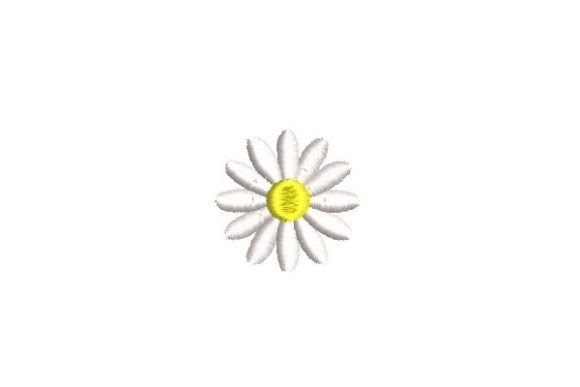
As an embroidery designer who’s tested hundreds of floral motifs for gift-focused businesses, the Mini Daisy Flower landed on my hoop with quiet confidence—not flash, not fuss, but unmistakable charm. It reads as both classic and contemporary: delicate petals with gentle curvature, a softly defined center, and balanced negative space that breathes on fabric. There’s no over-engineered detail—no micro-stitches that vanish on terrycloth or blur on knit—but enough definition to feel intentional, handmade, and full of warmth. It leans romantic without being fussy, playful without sacrificing elegance. For customers seeking meaning over trend, this design quietly says “thoughtful,” “tender,” and “made just for you.”
Where Mini Daisy Flower Shines in Real-World Gifting
I tested Mini Daisy Flower across six high-demand personalized gift categories—and each time, it elevated the perceived value of the finished product:
- Baby embroidery: Stitched on organic cotton swaddles and muslin burp cloths, it read as soft, gentle, and nurturing—ideal for gender-neutral nursery decor or milestone blankets.
- Wedding gift: On linen pillow covers and handkerchiefs, it added heirloom charm without competing with monograms or formal typography. Paired with ivory thread on oatmeal linen, it felt quietly luxurious.
- Embroidered towel: Applied to premium waffle-weave kitchen towels (with light stabilizer), the design held crispness—even after multiple washes in cold water and air drying.
- Pillow cover & blanket embroidery: At 2.8–3.2 inches wide, it scaled beautifully on standard 16” and 20” covers and baby blankets—centered, clustered, or repeated as a subtle border.
- Tote bags & aprons: On medium-weight canvas and cotton twill, it stitched cleanly without puckering—especially when paired with a cutaway stabilizer and reduced top tension.
- Etsy seller & craft fair product: As a digital embroidery file, it performed well in printable mockups—customers consistently commented on its “hand-drawn sincerity” in listing previews, boosting click-through and trust.
Where to Use Mini Daisy Flower With Intention
This isn’t a one-size-fits-all motif—and that’s its strength. Its simplicity invites thoughtful placement, not automatic application. Here’s where I recommend extra care:
- Small lettering or fine text near the flower: The daisy’s open center and petal spacing don’t support tight text integration. Keep names or dates at least ½ inch away—or use it solo.
- Highly textured fabric: Avoid heavy bouclé, thick terry loops, or loosely woven burlap unless you’re using dense tear-away + cutaway combo stabilizer and reducing stitch density manually.
- Stretchy baby clothes: While lovely on onesies in theory, the design’s slight density may cause distortion on ribbed knits. Better suited to stable fabrics like interlock or PUL-backed cotton.
- Curved surfaces (mugs, curved tote handles): Not applicable—it’s a flat embroidery file. Stick to planar surfaces like towels, linens, and apparel panels.
- Dark fabric: Test contrast early. Ivory or ecru thread can fade on navy or charcoal; opt for heather gray or soft gold for richer depth. Always run a printable mockup first.
- Frequent-wash items: Confirm your thread colors are colorfast and that stitch density allows for flexibility—overly dense fills may stiffen after repeated laundering.
How Mini Daisy Flower Builds Trust—and Sales
In my experience, customers don’t just buy embroidery—they buy emotional resonance. The Mini Daisy Flower delivers that instantly. Its botanical sincerity signals care, attention, and authenticity—key drivers for Etsy shoppers, boutique buyers, and gift-givers seeking something *real*. When photographed on natural linen or folded beside a handwritten note, it reads as “handmade product,” not mass-produced clip art. That perception lifts price tolerance, encourages repeat orders, and strengthens brand voice—especially for small shop products rooted in storytelling (e.g., “a daisy for every new beginning”).
For wedding gift designers, it offers subtle symbolism—innocence, loyalty, purity—without cliché. For baby product creators, it suggests gentleness and growth. And for digital product sellers? Its clean lines and moderate complexity make it ideal for bundling with coordinating stems or minimalist leaves—expanding your Single Flowers collection thoughtfully.
Practical Embroidery Notes You’ll Want Before Stitching
Before adding Mini Daisy Flower to your production queue, here’s what I always do:
- Test on scrap fabric that matches your final substrate—especially if switching from cotton to linen or terry.
- Check thread color contrast under natural and warm lighting. What looks soft in daylight may disappear in dim room photos.
- Confirm hoop size compatibility—some versions may require a 4x4” hoop minimum; verify before digitizing adjustments.
- Review stitch density visually in your embroidery software. If fills look overly compact, consider reducing density by 5–8% for breathable fabrics.
- Use proper stabilizer: lightweight cutaway for knits, tear-away for stable wovens, and fusible + tear-away for towels.
- Compare light and dark fabric mockups side-by-side—not just on screen, but printed—to assess balance and legibility.
- Check small details after stitching: ensure petal tips aren’t fraying and the center remains distinct, especially on low-thread-count fabrics.
- Confirm commercial licensing before selling finished products—this is essential for Etsy sellers, wholesale partners, and custom embroidery businesses.
The Mini Daisy Flower doesn’t shout. It invites. It fits naturally into moments that matter—first birthdays, vow renewals, quiet mornings with coffee on a freshly embroidered towel. As an embroidery file, it’s reliable. As a personalized gift, it’s resonant. And as part of your curated collection of Embroidery designs? It’s the kind of quiet keeper that earns repeat use, heartfelt reviews, and word-of-mouth referrals—because sometimes, the smallest bloom carries the deepest meaning.