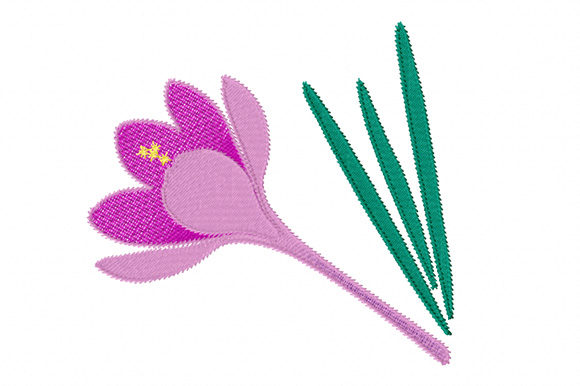
Purple Crocus Flower: A Springtime Embroidery Gem
First Impressions: Sweet, Seasonal, and Surprisingly Versatile
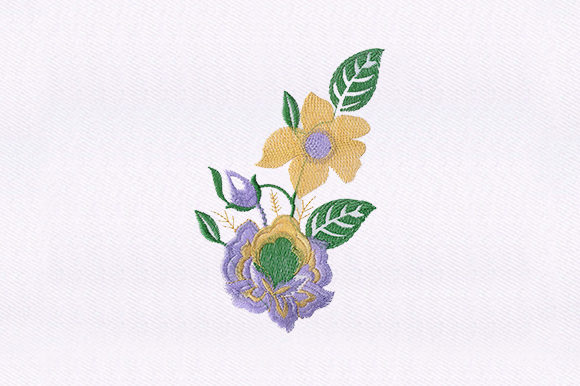
As an embroidery designer who’s tested hundreds of floral motifs for personalized gift shops, I’ll say it plainly: the Purple Crocus Flower lands with quiet confidence—not flashy, but deeply intentional. It doesn’t shout “spring!”; it whispers it, with soft petal gradients and a gentle silhouette that feels both nostalgic and fresh. This isn’t a botanical illustration—it’s a feeling: hopeful, tender, quietly celebratory. Customers drawn to handmade products often seek emotional resonance over trendiness, and this design delivers exactly that. It reads as elegant without stiffness, romantic without cliché, and seasonal without being dated. For baby embroidery, wedding gifts, or nursery decor, its charm lies in what it *doesn’t* do—no sharp angles, no fussy details, no visual noise. Just calm, considered beauty.
Where It Shines: Real-World Uses for Personalized Gifts
The Purple Crocus Flower thrives where intimacy matters. On a cotton baby blanket? It becomes a whispered promise—soft, safe, full of new beginnings. Stitched onto a linen pillow cover for a wedding keepsake? It adds poetic subtlety beside monogrammed initials. As an embroidered towel for a kitchen boutique? Its light gradient catches natural light beautifully, elevating an everyday item into a small luxury. Etsy sellers will appreciate how effortlessly it photographs—no heavy shadows, no thread glare—and how well it pairs with neutral palettes (ivory, oat, slate) in product mockups.
- Baby embroidery: Ideal for onesies, burp cloths, and milestone blankets—its scale and simplicity avoid overwhelming delicate fabrics.
- Wedding gift: Perfect for handkerchiefs, guestbook covers, or ring bearer pillows—elegant but not formal, meaningful without being literal.
- Nursery decor: Works on wall hangings, crib sheets, or mobiles—its spring mood supports growth and gentleness, not just decoration.
- Small shop product: Translates seamlessly across tote bags, aprons, and tea towels—consistent brand warmth without repeating patterns.
- Custom order preview: Clients instantly “get” it. No explanation needed. That builds trust before stitching begins.
Where to Use It Thoughtfully
Not every surface is equal—and the Purple Crocus Flower rewards thoughtful placement. Its light gradient relies on clean fabric texture and even tension. Avoid using it on heavily textured terrycloth towels unless you’ve tested stabilizer layers thoroughly; the subtle shading can blur. Similarly, stretchy baby knits demand careful hooping and lightweight cutaway stabilizer—otherwise, the petal definition softens. Curved surfaces (like rounded mug cozies or curved tote handles) may distort the gradient if digitized for flat application only. And while it’s lovely on dark fabric, confirm your thread colors offer enough contrast—especially in the petal highlights—to preserve that signature luminosity. If your digital embroidery file includes small stamen details, verify they hold up after stitching on dense weaves or low-DPI fabrics.
Why It Elevates Giftability—and Your Reputation
This isn’t just another flower motif. The Purple Crocus Flower signals care. When customers see it on your handmade product, they sense intention—not mass production. That perception lifts perceived value, especially in competitive spaces like baby product creation or wedding gift design. It also deepens emotional connection: crocuses are among the first blooms after winter, symbolizing resilience and renewal. That quiet symbolism resonates with new parents, newlyweds, or anyone marking a personal transition. In product photography, it performs consistently—no tricky shadows, no thread pooling—so your Etsy listings look polished, not pixelated. And because it’s part of the Single Flowers category, it fits naturally into curated collections alongside other botanicals, giving your shop cohesion without repetition.
Practical Embroidery Notes Every Maker Should Follow
Before stitching your first customer order, treat the Purple Crocus Flower like any high-stakes design—test, observe, refine:
- Test on scrap fabric that matches your intended product (e.g., terry cloth for towels, interlock knit for baby clothes).
- Check thread color contrast—especially if stitching on dark or heathered fabric. Light gradients need luminous thread, not muddy tones.
- Confirm hoop size compatibility—some versions may require a 4x4" hoop minimum; verify before digitizing for smaller items like sachets or keychains.
- Review stitch density. A light gradient shouldn’t mean sparse coverage—look for balanced fill stitches that avoid fabric show-through on lightweight materials.
- Use proper stabilizer: tear-away for stable wovens, cutaway for knits, and a light topping for fuzzy fabrics to prevent thread sinking.
- Compare light and dark fabric mockups side-by-side—even if your digital embroidery file looks perfect on screen, real-world lighting changes everything.
- Check small details after stitching, especially petal edges and gradient transitions. Does the flow feel smooth? Or does it snag visually?
- Confirm commercial licensing before selling finished products. As a digital embroidery file, its use in physical goods must be explicitly permitted—don’t assume.
For craft fair vendors, baby product creators, and wedding gift designers alike, the Purple Crocus Flower isn’t just another Embroidery option—it’s a thoughtful tool for storytelling. It invites customers to pause, to remember, to feel something tender and true. Used with care, it transforms simple textiles into heirlooms. And in a market flooded with noise, that kind of quiet impact? That’s what keeps handmade quality visible, trusted, and loved.