Cute Owl with Flower Lineart
A Friendly, Handmade Vibe That Builds Brand Warmth
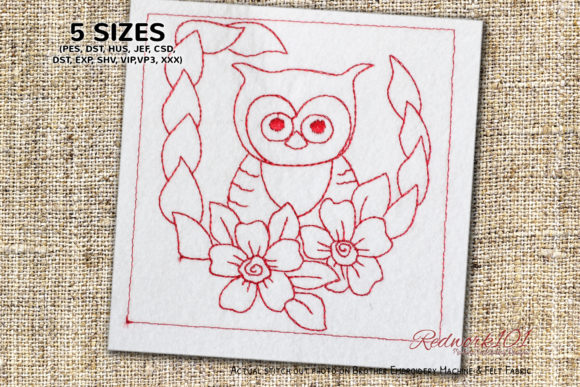
Right away, Cute Owl with Flower Lineart delivers a gentle, approachable impression—think local florist, cozy café, or artisanal pet brand. It’s not sleek or corporate; it’s warm, intentional, and quietly confident. The lineart style suggests hand-drawn authenticity, while the owl-and-flower pairing evokes curiosity, growth, and natural charm. For small businesses leaning into handmade product storytelling, this isn’t just decoration—it’s an invitation to connect. Unlike bold typographic logos or photorealistic birds, Cute Owl with Flower Lineart lands softly but memorably: friendly without being childish, detailed without feeling fussy.
Where This Embroidery Design Shines in Real Business Use
This machine embroidery design excels where personality matters most—and where subtlety builds trust. As an embroidered patch, it works beautifully on denim jackets, canvas tote bags, and aprons for boutiques or bakeries. Its clean outlines hold up well when stitched at 2.5"–3.5", making it ideal for chest logos on staff uniforms or sleeve accents on work shirts. On caps, it reads clearly at 2" wide when placed on the front panel—especially with thoughtful thread color contrast (more on that below). For Etsy sellers and craft studios, it adds instant cohesion to product packaging accents, gift tags, and customer thank-you cards—even as a small embroidered label sewn into handmade goods.
Because it’s lineart—not filled or shaded—it adapts elegantly across fabric types. On linen aprons, it feels artisanal. On twill caps, it reads crisp and modern. And on cotton tote bags? It balances visibility and texture without overwhelming the material. When paired with minimal branding (e.g., a tiny shop name beneath the owl), Cute Owl with Flower Lineart becomes part of a larger visual language—reinforcing brand identity through repetition, not repetition alone.
Use With Care: Practical Limits for Commercial Embroidery
Like any strong digital embroidery file, Cute Owl with Flower Lineart has sweet spots—and boundaries. Avoid scaling it below 1.75" for patches or cap fronts: fine floral details and thin branch lines may blur or stitch inconsistently on low-density machines. Curved surfaces—like baseball cap crowns or rounded tote bag corners—require careful digitizing adjustments; if your file doesn’t include underlay or pull compensation, test stitch first. Also, tread lightly on dark uniforms or textured fabrics (e.g., heavy canvas or corduroy): delicate lineart can visually recede without high-contrast thread colors or proper stabilizer support.
The optional Box Stitch mentioned in the description adds structure—but only if used intentionally. If the outer box is a separate color (as noted), confirm whether it’s meant as framing or functional bordering. On small patches, that box may dominate unless scaled proportionally. And remember: frequent washing weakens fine lineart over time. For high-use items like staff aprons or reusable totes, reinforce stitching density slightly—or reserve the design for lower-wear placements (e.g., upper sleeve vs. pocket).
How It Strengthens Your Small Business Merch Strategy
Cute Owl with Flower Lineart doesn’t shout—it resonates. That’s powerful for businesses building recognition through consistency, not volume. Customers associate soft, nature-infused imagery with care, craftsmanship, and local values—traits that elevate perceived product value and deepen buyer engagement. When stitched onto a bakery’s linen apron or a florist’s tote bag, it silently communicates ethos before a word is spoken. Visually, it supports cohesive design assets: pair it with muted earth-tone thread palettes, simple sans-serif typography, and natural fiber packaging to reinforce handmade presentation and visual consistency.
It also scales gracefully across touchpoints. Use it as a cap embroidery motif, then adapt the same lineart for a printable mockup on social media—or shrink it for a subtle tag on handmade soap labels. That versatility means fewer custom designs to manage, less revision time, and faster client approvals. For embroidery shops serving multiple small businesses, having a go-to birds-category design like this one streamlines quoting, digitizing, and production—especially when clients need fast-turnaround custom apparel for events or seasonal launches.
Key Embroidery Designer Notes Before Production
- Test in black and white first—lineart relies on contrast, not color. Confirm legibility without hue cues.
- Check small-patch viability: stitch a 2" version on scrap fabric matching your final garment (e.g., twill, canvas, or linen) before bulk runs.
- Review thread color contrast carefully, especially on dark or busy backgrounds. Light tan or sage green thread often lifts the owl more gently than stark white.
- Inspect spacing between flower elements and owl outline—tight gaps may close up during stitching without adequate underlay.
- Confirm hoop size compatibility with your embroidery machine and intended placement (e.g., cap frames vs. flat hoops).
- Always use appropriate stabilizer: medium-weight cutaway for stretchy fabrics, tear-away for stable wovens.
- Create a physical mockup for client approval—digital previews miss texture, drape, and real-world scale.
- Compare it beside your other design assets: does it harmonize with your logo, typography, and brand palette—or clash subtly?
- Verify commercial licensing before using Cute Owl with Flower Lineart on merchandise for resale. Not all digital embroidery files permit unlimited commercial embroidery use.
Remember: the strength of Cute Owl with Flower Lineart lies not in complexity, but in clarity. It’s a focused tool—not a standalone statement. Used thoughtfully, it becomes part of your brand’s quiet confidence: recognizable, reliable, and unmistakably human.